

-
1 (often used in reference to) North-America, Europe and Asia ( as regions in political economy and economics)
Political economy: triadУниверсальный русско-английский словарь > (often used in reference to) North-America, Europe and Asia ( as regions in political economy and economics)
-
2 Describes marketing which has a short-tem duration, such as non-media advertising, direct-mail, e-mail, exibitions, incentives, brochures, etc., which is targeted directly at the consumer/customer. Often used by compan
General subject: BTLУниверсальный русско-английский словарь > Describes marketing which has a short-tem duration, such as non-media advertising, direct-mail, e-mail, exibitions, incentives, brochures, etc., which is targeted directly at the consumer/customer. Often used by compan
-
3 The incorrect spelling of biatch most often used by pissy know nothing biatches. Especially when they have drank past thier limit of 3 beers in a 24 hour period.
Jargon: bee-otchУниверсальный русско-английский словарь > The incorrect spelling of biatch most often used by pissy know nothing biatches. Especially when they have drank past thier limit of 3 beers in a 24 hour period.
-
4 demented - see PHB Always applied to people, never to ideas. The plural form is often used as a noun. The pointy-haireds ordered me to use Windows NT, but I set up a Linux server with Samba instead.
Jargon: pointy hairedУниверсальный русско-английский словарь > demented - see PHB Always applied to people, never to ideas. The plural form is often used as a noun. The pointy-haireds ordered me to use Windows NT, but I set up a Linux server with Samba instead.
-
5 Господи, твою мать! (Melodramatic Chatspeak , often used by hormonally-deprived girls on AOL Instant Messenger) Means Oh my Fucking God.
General subject: OMFGУниверсальный русско-английский словарь > Господи, твою мать! (Melodramatic Chatspeak , often used by hormonally-deprived girls on AOL Instant Messenger) Means Oh my Fucking God.
-
6 is commonly used to describe a wife
General subject: trophy wife (usually young and attractive, regarded as a status symbol for the husband, often older and affluent.)Универсальный русско-английский словарь > is commonly used to describe a wife
-
7 часто
often, frequently, commonly• Будет часто случаться, что... - It will often happen that...• Для того, чтобы описать реакцию основания, наиболее часто используется модель Винклера.... - For the base response the most often used model is the Winkler foundation.• Дополнительную информацию можно часто получить из... - Additional information can often be obtained from...• Другой часто встречающейся величиной является... - Another quantity often encountered is...• Мы будем очень часто использовать... - Extensive use will be made of...• На практике мы часто можем пренебречь... - In practice, we can often neglect...• На практике часто случается, что... - In practice it often happens that...• Нам будет часто представляться возможность поговорить о... - We shall often have occasion to speak of...• Однако для этих случаев часто более эффективным является... - For these cases it is, however, often more efficient to...• Однако на практике часто случается, что... - In practice it often happens, however, that...• Однако очень часто мы должны рассматривать... - But very often we have to consider...• Однако часто бывает необходимо... - However, it is frequently necessary to...• Однако часто мы не знаем... - But in many cases, we do not know...• Подобные трудности часто встречаются на практике. - Such difficulties often arise in practice.• Подобный эффект возникает очень часто. - Such phenomena are of very frequent occurrence.• Поэтому часто бывает желательно гарантировать... - It is often desirable, therefore, to ensure that...• Такие явления часто встречаются на практике. - Such phenomena are frequently encountered in practice.• Такого типа ошибки часто встречаются на практике. - These sorts of errors occur frequently in practice.• Часто у нас будет возможность... - We shall have frequent occasion to...• Часто бывает необходимо... - It is frequently necessary to...• Часто бывает полезно иметь явные выражения для... - It is often useful to have explicit expressions for.• Часто бывает проще доказать, что... - It is often easier to prove that...• Часто бывает трудно... - It is often difficult to...• Часто возникающая задача состоит в следующем... - A problem which arises very frequently is...• Часто обнаруживается, что... - It is often found that...• Часто случается, что... - It frequently happens that...• Часто трудно (определить и т. п.)... - Often, it is difficult to...• Часто удобно проводить последнюю процедуру... - It is often convenient to carry out the latter process by...• Часто это проще сделать, чем... - It is often simpler to do this than to...• Эти результаты часто бывают необходимы. - These results are needed frequently. -
8 использоваться
be useful, be used (up), be utilized, be in service in• В основном он используется в/ при... - It is principally used in...• В случае, когда используются такие соглашения, предполагается, что... - When such terms are used, it is assumed that...• Данная методика будет использоваться в последующих главах. - This procedure will be followed in subsequent chapters.• Данный метод весьма общий, он может использоваться для того, чтобы... - The method is quite general and can be used to deal with...• Для очень тонких работ обычно используется серебро, потому что... - For very accurate work, silver is usually used because...• Итак, мы намечаем несколько методов, которые могут использоваться, чтобы... - We therefore outline some procedures which can be used to...• Какая бы техника ни использовалась, в основном всегда будет... - Whichever technique is used, there will generally be...• Мы увидим, что эти методы могут использоваться лишь тогда, когда... - It will be observed that these methods are only applicable when...• На самом деле оба метода используются на практике. - Both methods are in fact used in practice.• Обнаружилось, что данный метод успешно используется в широком диапазоне... - The method is found to be successful on a wide range of...• Одна простая теория может использоваться для... - A simple theory can be used to...• Подобная техника используется для... - A similar technique is used for...• Подобное соглашение используется, когда... - A similar convention is used when...• Подобные методы могут использоваться в более сложных ситуациях. - Similar methods may be employed in more complicated cases.• Поэтому это долго использовалось для... - For these reasons, it has long been used for...• Следует подчеркнуть, что этот метод должен использоваться только если... - It is to be emphasized that this method should be used only if...• Следующие утверждения часто используются для того, чтобы определить... - The following propositions are often used to determine...• Схема, которую мы будем использовать, идентична той, что использовалась для... - The scheme we will use is identical to that used for...• То, что было сказано выше, применяется в частности... - What has been said above applies in particular to...• Уравнение (4) часто используется как базис для вычислений... - Equation (4) is often used as a basis for the calculation of...• Чрезвычайно похожие идеи используются в... - Precisely similar ideas are applicable to...• Эта книга может использоваться для разработки... - This book can be used to design...• Эта терминология использовалась рядом авторов. - This terminology has been used by a number of writers.• Это устройство может использоваться каждый раз, когда... - This device can be employed whenever... -
9 метод
method, process, procedure, approach, technique, practice, tool, strategy• Безо всяких изменений данный метод подходит для... - The method lends itself readily to...• Более подходящим методом является... - A better technique is to...• Более прямой метод получения величины F рассматривается в главе 9. - A more direct procedure for obtaining F is considered in Chapter 9.• Более подходящим методом является определение... - A more satisfactory method is to establish...• Большинство из этих более продвинутых методов требует... - Most of these more advanced methods require...• Были предложены несколько методов. - Several techniques have been suggested.• Было довольно нелегко разработать метод для... - It was fairly difficult to develop a method for...• Было довольно сложно разработать метод для... - It was quite difficult to develop a method for...• Было легко разработать метод для... - It was easy to develop a method for...• Было относительно легко (= просто) разработать метод для... - It was relatively easy to develop a method for... (not easy on an absolute scale, but less challenging than other tasks)• Было почти невозможно разработать метод для... - It was almost impossible to develop a method for... (so hard that we nearly failed)• В альтернативном методе мы вычисляем... - In the alternative method we calculate...• В данной главе мы представим метод для... - In this chapter, we shall formulate the procedure for...• В данном приближенном методе существенно... - In this approximation procedure it is essential to...• В качестве примера применения описанного выше метода мы показываем, что... - As an example of the method described above we show that...• В недавние годы этот метод был улучшен посредством использования (чего-л). - In recent years the subject has been enriched by the use of...• В основном мы следуем методу... - In essence we follow the procedure of...• В последние годы несколько авторов отказались от этого метода. - Several authors have, in recent years, departed from this procedure.• В своих основных чертах это был метод, использовавшийся Смитом [1]. - In essence, this was the method employed by Smith [1].• В соответствии с методом, намеченным в Главе 1, мы... - In accordance with the method outlined in Chapter 1, we...• В этой главе мы даем эффективный метод... - In this chapter we give an efficient method for...• Вместо этого давайте разработаем (один) общий метод, посредством которого... - Instead, let us develop a general method whereby...• Во многих случаях необходимо обращаться за помощью к приближенным методам. - In many cases it is necessary to resort to approximate methods.• Возможно, безопасно применить метод... к... - It is probably safe to apply the method of... to...•Возможно, наилучшим методом является... - Perhaps the best approach is to...• Все вышеупомянутые методы не применимы для малых х. - The foregoing methods all fail for small x.• Второй метод вывода уравнения (1) формулируется следующим образом. - A second method of obtaining (1) is as follows.• Второй метод точно согласуется с... - The latter method agrees precisely with...• Вышеуказанным методом обнаружено (= найдено), что... - By the above method it is found that...• Геометрически метод состоит в следующем. - Geometrically, the procedure is as follows.• Главное преимущество данного метода заключается в том, что... - The chief advantage of the method is that...• Главным преимуществом данного метода является его общность. - The principal advantage of the method is its generality.• Главным преимуществом данного метода по сравнению с традиционными является то, что... - The major advantage of this procedure over the traditional method is that...• Главным преимуществом данного метода является его простота. - The principal virtue of the method is its simplicity.• Далее, в данном методе заранее предполагается, что... - Further, the method presupposes...• Данное свойство является основой одного метода нахождения... - This property provides one method of determining...• Данный метод был предложен в статье [1]. - The method was suggested by Smith, et al. [1].• Данный метод намного точнее, чем... - The present method is much more precise than...• Данный метод не применим для/в... - The method does not apply to...• Данный метод невозможно применить, когда/ если... - The method is not applicable when...• Данный метод одинаково успешно можно применять к... - The method can equally well be applied to...• Данный метод особенно подходит в случае, когда... - The method is particularly appropriate when...• Данный метод позволяет... - The method enables one to...• Данный метод позволяет исследователю... - The method allows an investigator to...• Данный метод применим к широкому классу (в широком классе)... - The method is applicable to a large class of...• Данный метод прост и довольно интересен, однако... - This method is simple and quite interesting, but...• Данный отчет описывает новый метод... - This report describes a new method of...• Данным методом можно решить ряд важных практических задач. - This method enables us to solve several problems of practical importance.• Детали этого метода можно найти в [1]. - Details of the method can be found in Smith [1].• Для... можно применить несколько методов. - Several methods are available for...• Для получения... был использован ряд методов. - A number of methods have been used to obtain...• Для преодоления этой трудности был разработан один метод. - One method has been advanced for overcoming this difficulty.• Должны быть развиты методы для измерения... - Methods should be developed for measuring...• Достоинство этого метода состоит в том, что... - The advantage of the method is that...• Другим недостатком этого метода является то, что... - The other disadvantage of this procedure is that...; Another disadvantage of this procedure is that...• Его метод доказательства весьма оригинален. - The method of proof is quite ingenious.• Единственный доступный нам в настоящее время метод - это... - The only method available to us so far is...• Единственным известным недостатком этого метода является то, что... - The only known disadvantage of this procedure is that...• Еще одним методом является... - Still another approach is to...• Здесь рассматривается (один) общий метод получения этих решений. - A general method of obtaining these solutions is considered here.• Важность наших методов состоит в том, что они будут давать... - The significance of our methods is that they will yield...• Значительно более удобный метод состоит в том, что... - A far more convenient approach is to...• Имеются два обычно используемых метода для... - There are two commonly used methods for...• Имеются три метода решения такой задачи. - There are three ways of attacking such a problem.• Интересным альтернативным методом является следующий. - An interesting alternative procedure is as follows.• Используя данный метод, следует помнить, что... - In using this method it is well to remember that...• Используя любой подобный метод, необходимо (помнить и т. п.)... - With any method such as this it is necessary to...• Используя этот метод, они нашли, что... - Using the method, they found that...; Using the method, they learned that...; Using the method, they determined that...; Using the method, they discovered that...• Используя этот новый метод, мы можем... - By this new method it will be possible to...• Итак, мы наметим несколько методов, которые могут использоваться для того, чтобы... - We therefore outline some procedures which can be used to...• К сожалению, этот метод оказался неприменим. - Unfortunately, the method was not applicable; The method, unfortunately, was not applicable.• К счастью, имеется один простой и подходящий для этого метод. - Fortunately, there is a simple technique available for doing this.• Каков недостаток этого метода? - What is the disadvantage of this procedure?• Каковы преимущества данного метода? - What are the advantages of this procedure?• Конечно, это могло бы быть следствием неподходящих методов. - Of course, this could reflect the use of inappropriate methods.• Конечно, этот метод не всегда применим. - Of course, this method will not always work.• Коротко, мы будем интересоваться методами, которые... - In short, we will inquire into the ways in which...• Кратко опишем метод для его оценки. - A method for estimating this will be given shortly.• Метод... должен быть применен к/в... - The method of... should apply to...• Метод... мог бы быть надежно применен для... - The method of... could safely be applied to,..• Метод анализа, намеченный в предыдущем абзаце, показывает... - The method of analysis outlined in the last paragraph shows...• Метод может использоваться для оценки... - The method can be used to estimate...• Метод обладает очевидным преимуществом... - The method possesses the obvious advantage of...• Метод основывается на принципе, что... - This method is based on the principle that...• Метод перестает быть достаточно точным, если... - The method ceases to be reasonably accurate if...• Метод состоит в следующем. - The procedure is as follows.• Метод состоит из двух шагов. - The approach is in two steps.• Метод требует от пользователя обеспечить... - The method requires the user to provide...• Метод, который здесь описывается, требует... - The method to be described here involves...• Метод, который мы описали, в общем случае не подходит для... - The procedure we have described is not, in general, suitable for...• Метод, приведенный в этом параграфе, подобным образом может быть применен к... - The method of sections may be applied in a similar way to...• Метод, с помощью которой это было получено, известен как... - The technique by which this is achieved is known as...• Методы, которые мы рассмотрели, позволяют нам... - The methods we have considered enable us to...• Можно использовать множество методов. Например,... - A variety of methods may be employed, e. g.,...• Можно ожидать, что метод обеспечит нахождение по меньшей мере одного корня. - The method can be expected to provide at least one root.• Мы будем придерживаться этого метода. - We shall follow this method.• Мы ввели широкий класс методов решения... - We have introduced a wide range of procedures for solving...• Мы можем обратить метод и вывести, что... - We can reverse the process and deduce that...• Мы наметим в общих чертах метод, основанный на... - We will outline a procedure based on...• Мы откладываем обсуждение подобных методов до параграфа 5. - We defer the discussion of such methods to Section 5.• Мы принимаем полностью отличный от данного метод. - We adopt an entirely different method.• Мы проиллюстрируем данный метод для случая... - We shall illustrate the procedure for the case of...• Мы считаем, что метод... можно применять к/в... - We believe that the method of... is applicable to...• Мы увидим, что эти методы могут использоваться лишь тогда, когда... - It will be observed that these methods are only applicable when...• Мы упоминаем лишь два таких метода... - We mention only two such methods of...• На данный метод часто ссылаются как на... - This process is often referred to as...• На самом деле оба метода используются на практике. - Both methods are in fact used in practice.• На сегодняшний день важность этого метода заключается в том, что... - For the present, the significance of this process lies in the fact that...• Наиболее важным преимуществом данного метода является то, что... - The primary advantage of this procedure is that...• Наиболее просто следовать этому методу в случае... - The procedure is most simply followed for the case of...• Наиболее часто используемые методы перечислены ниже:... - The methods that are most often used follow:...• Наиболее широко используемые методы основываются на... - The techniques most widely used are based on...• Наиболее широко используемый метод это тот, что был введен Смитом [1]. - The method most commonly employed is that introduced by Smith [1].• Наш метод будет весьма существенно отличаться от данного. - Our procedure will be quite different from this.• Нашей основной целью является описание систематических методов для... - Our first concern is to describe systematic methods for...• Не существует систематического метода определения... - There is no systematic way of determining...• Недостатком данного метода является то, что он требует... - The disadvantage of this procedure is that it requires...• Недостаток этого метода можно видеть... - The flaw in this approach can be seen by...• Несколько методов анализа были введены с помощью... - Several methods of analysis are introduced by means of...• Ни один из этих методов не требует... - Neither of these methods requires...• Ниже описываются два подобных метода. - Two such methods are described below.• Обнаружилось, что данный метод (здесь) не приложим. - It turned out that the method was not applicable.• Обнаружилось, что данный метод успешно используется в широкой области... - The method is found to be successful on a wide range of...• Обычно считают, что Смит [1] положил начало этому методу. - Smith [1] is usually credited with originating this method.• Обычным методом является измерение... - A common procedure is to measure...• Один такой несколько искусственный метод занимается... - One such trick is concerned with...• Одна элегантная версия данного метода использует... - An elegant version of this method employs...• Однако данный метод требует предварительного знания... - However, this method presupposes a knowledge of...• Однако лучше всего ввести этот метод, рассматривая... - However, the method is best introduced by considering...• Однако метод может не сработать даже при отсутствии... - However, the procedure may fail even in the absence of...• Однако мы воспользуемся здесь более общим методом, разработанным Воровичем [1]. - But we shall follow here a more general method due to Vorovich [1].• Однако мы легко можем разработать метод для... - We can, however, easily devise a means for...• Однако решения все еще могут быть получены при помощи чисто численных методов. - Solutions can still be obtained, however, by resorting to purely numerical methods.• Однако существует стандартный метод работы с... - However, there is a standard method of dealing with...• Однако этот метод не работает, будучи примененным к... - This approach, however, breaks down when applied to...• Однако этот метод совершенно не удовлетворяет нашим целям. - This procedure, however, falls far short of our goal.• Одним из преимуществ этого метода является то, что... - One advantage of this procedure is that...• Одним общим недостатком данного метода является наличие... - One common drawback of this method is the presence of...• Оказывается, данный метод первоначально появился в работах Смита [1]. - The method appears to have originated in the works of Smith [1].• Описанная выше процедура представляет один строгий метод... - The procedure described above represents a rigorous method of...• Описанный выше метод может быть использован для построения... - The procedure described above can be used to construct...• Описанный здесь метод всегда приводит... - The procedure described here always yields...• Основной слабостью метода является... - The main weakness of the method is...• Отличительным преимуществом данного метода является то, что... - A distinct advantage of the procedure is that...• Отличный от вышеупомянутого метод был предложен Джонсом [1]. - A different method has been given by Jones [1].• Перед этим не имелось общепризнанного метода... - Prior to this, there was no generally accepted method of...• Подобные методы могут использоваться в более сложных ситуациях. - Similar methods may be employed in more complicated cases.• Подобный метод был рассмотрен Смитом [1], который... - Such a procedure has been considered by Smith [1], who...• Подобный метод может быть принят, когда... - A similar method may be adopted when...• Подобный метод применяется к/в... - A similar method applies to...• Пользуясь такими методами, мы можем избежать... - By such expediencies we can avoid...• Потенциальное преимущество данного метода состоит в том, что... - A potential advantage of this procedure lies in the fact that...• Поэтому мы применяем слегка модифицированный метод. - We therefore adopt a slightly different method.• Предпочтительным, однако, является метод... - The preferred method, however, is to...• Преимущество этого метода заключается в том, что... - The advantage of this method lies in the fact that...• Преимущество этого метода, следовательно, состоит в том, что он обеспечивает простой... - The advantage < this procedure, therefore, is that it provides a simple...• Применение данного метода ограничено... - The application of this method is confined to...• Применение данного метода показывает... - An application of this process shows...• Применение данного специального метода оправдано (чем-л). - The adoption of this particular method is justified by...• Проиллюстрируем общий метод, рассматривая... - We illustrate the general method by considering...• Рассматриваемые до сих пор методы касаются... - The methods considered so far have been concerned with...• Результаты всех этих методов согласуются с... - The results of all these methods are consistent with...• Решающим недостатком этого метода является то, что... - The crucial disadvantage of this procedure is that...• С другой стороны, этот метод даст... - On the other hand, this method will give...• Открытие Смита сделало возможным новый метод... - Smith's discovery made possible a new method of...• Самым простым из таких методов является (метод)... - The simplest such method is...• Следовательно, необходимо развить общий метод для... - It is, therefore, necessary to devise a general method for...• Следует подчеркнуть, что этот метод должен использоваться только если... - It is to be emphasized that this method should be used only; if...• Следует уделить внимание методам... - Attention should be given to methods of...• Следующее рассуждение иллюстрирует метод... - The following treatment illustrates the method of...• Следующим недостатком этого метода является то, что... - A further disadvantage of this procedure is that...• Смит [lj обнаружил метод для... - Smith [1] discovered a method for...• Смит [1] предложил метод вычисления... - Smith [l] has proposed a method of calculating...• Смит [1] применил этот метод к... - Smith [1] has applied this method to.,.• Стандартным методом является следующий. - The standard procedure is as follows.• Таким образом, мы имеем метод, который позволяет... - Thus we have a method which yields...• Тем не менее, развитые нами методы обеспечивают основу для... - However, the methods we have developed provide a basis for...• Теперь мы (полностью) готовы использовать методы, разработанные во втором параграфе. - We are now ready to use the methods of Section 2.• Теперь мы обсудим систематические методы, которые f можно использовать в/ при... - We now discuss systematic methods which can be applied to...• Теперь мы применим метод Римана, чтобы... - We now apply Riemann's method in order to...• Только что описанный метод известен как... - The procedure we have described is known as...• Тот же метод можно применять в/к... - The same method may be applied to...• Удобным методом достижения необходимой цели является... - A convenient way to accomplish this is to...• Усовершенствованные экспериментальные методы сделали возможным... - Refined experimental methods have made it possible to...• Фундаментальным преимуществом этого метода является то, что... - A fundamental advantage of this procedure is that...• Хотя этот метод и несколько необычен, он справедлив (= работает) как и любой из известных методов. - Although this method is somewhat unorthodox, it is as valid as any of the more familiar methods.• Центральной идеей, на которой основывался подход Смита [1], была... - The essential idea behind Smith's approach was that...• Чтобы воспользоваться преимуществами данного метода, необходимо... - In order to take advantage of this procedure, one must...• Чтобы проиллюстрировать применение метода, мы... - То illustrate the process we...• Эдисон изобрел новый метод для... - Edison invented a new method for...• Эдисон обдумывал новый метод для... - Edison devised a new method for...• Эти методы вводятся в следующем параграфе. - These methods are introduced in the next section.• Эти методы весьма громоздки. - These processes are tedious.• Эти методы настолько чувствительны, что... - These methods are so sensitive that...• Эти методы нельзя применять в случае, когда... - These methods are not applicable in the case of...• Эти методы очень чувствительны к малым изменениям в... - These methods are very sensitive to small changes in...• Эти методы получают своих сторонников, так как... - These methods attract proponents because...• Этим методом (= На этом пути) мы можем получить (вывести и т. п.)... - In this way we can arrive at...• Это будет объяснено примерами, когда мы будем изучать метод... - This point will be clarified by examples when we study the method of...• Это известный метод, принятый во многих работах... - This is a familiar procedure, undertaken in many studies of...• Это иллюстрирует важный метод... - This illustrates an important method of...• Это можно увидеть двумя методами. - This can be seen in two ways.• Это несущественный недостаток метода, поскольку... - This is not a serious defect of the method because...• Это приводит к полезным методам обращения с... - This leads to useful ways of dealing with...• Это простой метод, который можно проиллюстрировать, рассматривая... - This is a simple procedure which can be illustrated by considering...• Этот метод аналогичен использованному в... - The procedure is similar to that used in...• Этот метод был описан Смитом [1]. - The method has been described by Smith [1].• Этот метод был последовательно доведен до полной эффективности Смитом [3]. - This method was subsequently brought to full fruition by Smith [3].• Этот метод вполне очевиден. - This procedure is quite straightforward.• Этот метод доказательства довольно общий и применим к... - The method of proof is quite general and applies to...• Этот метод известен как... - The procedure is known as...• Этот метод имеет следующие недостатки. - The procedure has the following disadvantages.• Этот метод интересен по следующей причине. - This method is of interest for the following reason.• Этот метод легко адаптируется к/ для... - This procedure is readily adaptable to...• Этот метод легко понять, замечая, что... - The process is easily understood by noting that...• Этот метод лучше всего иллюстрируется примером. - The procedure is best illustrated by an example.• Этот метод наиболее успешен в случае, когда он применяется в... - The method is most successful when applied to...• Этот метод очевидным образом может быть распространен на (случай)... - This process can clearly be extended to...• Этот метод принимается, поскольку... - This approach is adopted because...• Этот метод являлся стандартным в течение многих лет. Несмотря на более новые разработки он будет использоваться и далее. - This approach has been standard for many years, and will continue to be of great use regardless of newer developments.• Этот технически простой метод действительно требует... - This technically simple method does require... -
10 навесной замок
навесной замок
-Параллельные тексты EN-RU
...be provided with a means permitting it to be locked in the OFF (isolated) position (for example by padlocks).
[IEC 60204-1-2006]... иметь средства для запирания в положении ОТКЛЮЧЕНО (отделено), например, с помощью навесных замков.
[Перевод Интент]
Источник: insight-security.com
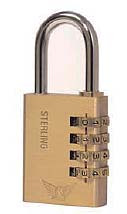
In simple terms, a padlock has three major components; the Body, the Shackle and the Locking Mechanism, …it may also incorporate features such as a weatherproof casing, anti drill or anti cropping protection, etc.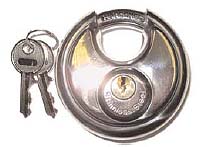
Discus style padlocks - have no angular corners, so are often used with cycle security chains and cables, as well as being a popular choice for securing doors on sheds and beach huts, etc. When used as a door lock, they will typically be used in conjunction with the special shrouded discus hasp and staple set, which offers extra protection to the padlock shackle.
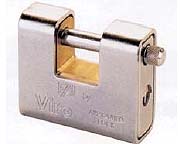
Shutter Locks / Anvil Locks - are typically used to secure the external (or internal) security roller shutters fitted to shop fronts. They are also popular for use with parking posts, motorcycle security chains, etc.
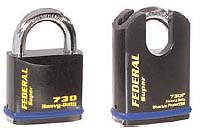
Conventional Style padlocks have a wide range of applications from low security applications like locking your toolbox, to high security uses such as securing factory gates or protecting motorcycles. They are typically available as; Open, Close, or Semi Enclosed Shackle types
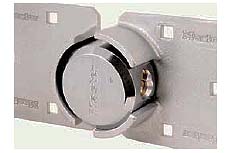
Shackleless type padlock (shown with special hasp)Shackleless Padlocks - this is a bit of a misnomer as the padlock does of course have a shackle, it’s just that it’s on the underside of the lock body and therefore unseen. This type of padlock can be round (like the one pictured) or rectangular, but typically, they are designed to be used with a special matching security hasp. Because of their design, these units are difficult to attack and over recent years, as well as being used on warehouse doors, etc, they have also become very popular for use on vans and other vehicles where they are used to secure opening double doors.
A "Close Shackle" padlock is one with built in shoulders, which are designed to minimise the amount of the shackle exposed, to a saw or bolt cropper attack. This type of padlock will normally have a higher security rating than an equivalent unit with a semi enclosed or open shackle, however subject to size and clearances, may not be practical for instance, to use where you need to secure 2 chain links together or require a padlock for use with a shrouded hasp, etc. To make them easier to use, many Close Shackle padlocks feature "removable shackles" which are fully released from the body of the padlock when it's unlocked.
An "Open Shackle" padlock will typically be easier to use where the shackle needs to pass through 2 chain-links (i.e, a chain securing two opening gates together), etc. As more of the shackle is exposed however, this makes it potentially easier to attack with a saw or bolt croppers.
A "Semi Enclosed Shackle" padlock is something of a compromise, but will often offer more flexibility in use than a Close Shackle padlock and improved security over an Open Shackle model.
Тематики
EN
Русско-английский словарь нормативно-технической терминологии > навесной замок
-
11 Ш-20
НИ ШАГУ NP gen Invar1. \Ш-20 (дальше, вперед, назад и т. п.) ( indep. sent used as imperdo not move (used as a command forbidding s.o. to move from the precise spot where he is standing)not a (one) step farther!freeze! stay where you are! stay put! don't move (budge) (an inch)!2. — к кому, куда coll (predicsubj: human usu. used as impernot to visit s.o. or go to some place at all ( usu. used as an order or warning): Imper к Y-y (в место Z) - ни шагу = don't (don't you dare etc) set foot in Y's house (at Y's apartment, in place Z etc)don't even think about going to Yb house (Yb apartment, place Z etc) don't even think about going to see Y.3. - откуда coll (predicsubj: human (often omitted)) not to leave some place (for a certain period of time or ever) (often used as a command): Imper из места Z ни шагу — don't set foot outside (out of) place Z.(Мурзавецкая:) Смотреть за Аполлоном Викторычем, чтоб ни шагу из дому! (Островский 5). (М.:) Watch out for Apollon Viktorovich. Don't let him set foot out of the house! (5a).4. \Ш-20 не сделать, не предпринять (obj) not (to do or make any attempt to do) anything (in a situation where some action is expected, required etc): not make a (single) movenot take any steps (in limited contexts) make no effort (to do sth.).5. - (не отставать, не отходить и т. п.) от кого-чего ( adv or predicsubj: usu. human or animal)) not (to fall behind s.o. or sth.) even the slightest distance (when walking, running etc)X не отставал (не отходил) от Y-a \Ш-20 = X stayed right on person Yb heels (tail).6. - от кого-чего (не отходить и т. п.) ( adv or predic (with subj: human or animal)) not (to be far from s.o.) for even the slightest amount of timeX не отходит от Y-a \Ш-20 — X is never more than a few steps (feet) away from YX doesn't leave Y (Yb side) for an instant (a second, a minute) X sticks (stays) close to Y all the time (at all times etc) X stays glued to Y% side.7. - без кого (predicsubj: human not to do or undertake anything (without s.o. 's consent, permission)X без Y-a \Ш-20 = X doesn't (dare (dare to)) take a step (make a move) without Y (Yb permission, Y's go-ahead, Yb OK etc)(Саяпин:)...Без жены он, сам знаешь, ни шагу. (Зилов:) А он жену вчера на юг отправил. (Саяпин:) Вот оно что. То-то загулял мужик... (Вампилов 5). (S.:)... You know he doesn't make a move without his wife. (Z.:) But he sent her off to the south yesterday. (S.:) So that's why the guy is cutting loose... (5b).8. \Ш-20 без кого-чего (predicimpers or with subj: human to be unable to function, act etc without s.o. or sth.: X без Y-a \Ш-20 = X won't (can't, doesn't etc) do anything (do a thing, go anywhere etc) without Y X is lost (helpless) without Y (in limited contexts) X can't get along (make it) without Y.«Ведь не обходится же военная музыка без специалистов с высшим образованием?» - «Но без тебя-то, Аркадий, любая музыка обойдётся! Я в этом нисколько не сомневаюсь!» -«Ещё бы, конечно! Но ведь мне-то без неё - куда? Я без неё -ни шагу...» (Залыгин 1). "How can martial music get along without specialists with higher education?" "Any music can get along without you, Arkady! I've no doubt about that." "Of course it can! But how can I get along without it? Without it I can't do a thing..." (1a). -
12 ни шагу
• НИ ШАГУ[NPgen; Invar]=====1. ни шагу (дальше, вперёд, назад и т. п.) [indep. sent used as imper]⇒ do not move (used as a command forbidding s.o. to move from the precise spot where he is standing):- not a < one> step farther!;- freeze!;- stay where you are!;- stay put!;- don't move (budge) (an inch)!⇒ not to visit s.o. or go to some place at all (usu. used as an order or warning):- Imper к Y-y (в место Z) - ни шагу≈ don't (don't you dare etc) set foot in Y's house (at Y's apartment, in place Z etc);- don't even think about going to Y's house <Y's apartment, place Z etc>;- don't even think about going to see Y.⇒ not to leave some place (for a certain period of time or ever) (often used as a command):- Imper из места Z ни шагу≈ don't set foot outside (out of) place Z.♦ [Мурзавецкая:] Смотреть за Аполлоном Викторычем, чтоб ни шагу из дому! (Островский 5). [М.:] Watch out for Apollon Viktorovich. Don't let him set foot out of the house! (5a).4. ни шагу не сделать, не предпринять [obj]⇒ not (to do or make any attempt to do) anything (in a situation where some action is expected, required etc):- [in limited contexts] make no effort (to do sth.).5. ни шагу (не отставать, не отходить и т. п.) от кого-чего [adv or predic (subj: usu. human or animal)]⇒ not (to fall behind s.o. or sth.) even the slightest distance (when walking, running etc):⇒ not (to be far from s.o.) for even the slightest amount of time:- X doesn't leave Y (Y'sside) for an instant (a second, a minute);- X sticks (stays) close to Y all the time (at all times etc);- X stays glued to Y's side.⇒ not to do or undertake anything (without s.o.'s consent, permission):- X без Y-a ни шагу ≈ X doesn't (dare < dare to>) take a step (make a move) without Y <Y's permission, Y's go-ahead, Y's OK etc>.♦ [Саяпин:]...Без жены он, сам знаешь, ни шагу. [Зилов:] А он жену вчера на юг отправил. [Саяпин:] Вот оно что. То-то загулял мужик... (Вампилов 5). [S.:]... You know he doesn't make a move without his wife. [Z.:] But he sent her off to the south yesterday. [S.:] So that's why the guy is cutting loose... (5b).⇒ to be unable to function, act etc without s.o. or sth.:- X без Y-a ни шагу ≈ X won't (can't, doesn't etc) do anything (do a thing, go anywhere etc) without Y;- [in limited contexts] X can't get along (make it) without Y.♦ "Ведь не обходится же военная музыка без специалистов с высшим образованием?" - "Но без тебя-то, Аркадий, любая музыка обойдётся! Я в этом нисколько не сомневаюсь!" - "Ещё бы, конечно! Но ведь мне-то без неё - куда? Я без неё - ни шагу..." (Залыгин 1). "How can martial music get along without specialists with higher education?" "Any music can get along without you, Arkady! I've no doubt about that." "Of course it can! But how can I get along without it? Without it I can't do a thing..." (1a).Большой русско-английский фразеологический словарь > ни шагу
-
13 Д-208
ВВЕРХ (КВЕРХУ obs) ДНОМ AdvP these forms only fixed WO1. пойти, идти - ( advoften used in sentences with subj: все) (in refer, to s.o. 's everyday life, general goings-on, the activities of a certain group or within a certain sphere etc) (to be going or begin to go) in a way contrary to normal, in a disorderly fashion, not the proper way: (be going) topsy-turvy.С приездом свекрови всё у нас в доме пошло вверх дном. When my mother-in-law arrived everything at home started going topsy-turvy.2. перевернуть, перерыть и т. п. что, бытье - (obj-compl with перевернуть etcobj: concr or abstr, often всё) or, less often, subj-compl with бытье ( subj: concr or abstr, often всё)) (used in refer, to the furnishings, objects etc in some place, to the typical routine of some organization, to s.o. 's way of life etc) (to bring sth., be brought) into a state of disorder, confusion: (turn sth. (everything)) upside down (be (end up)) topsy-turvy.Что вам сказать? Что можно сказать, когда вдруг приходят, устраивают обыск и уводят твоего отца, тихого человека, переворачивают все вверх дном, ищут ворованное, деньги и ценности, как будто не понимают, что будь отец вор, то он бы все из дома унес (Рыбаков 1). What can you say? What can you say when they suddenly come and search your house and take your father away, a harmless man, and when they turn everything in the house upside down in the search for stolen goods and money and valuables, as if they don't realize that, had father really been a thief, he would have got everything out of the house during the six months of the investigation' (1a).Тридцать первого августа, в субботу, в доме Ростовых все казалось перевернутым вверх дном. Все двери были растворены, вся мебель вынесена или переставлена, зеркала, картины сняты (Толстой 6). On Saturday, the thirty-first of August, everything in the Rostov house seemed topsyturvy. All the doors were open, the furniture had been carried out or displaced, and the mirrors and pictures taken down (6a). -
14 вверх дном
[AdvP; these forms only; fixed WO]=====1. пойти, идти - [adv; often used in sentences with subj: все]⇒ (in refer, to s.o.'s everyday life, general goings-on, the activities of a certain group or within a certain sphere etc) (to be going or begin to go) in a way contrary to normal, in a disorderly fashion, not the proper way:- (be going) topsy-turvy.♦ С приездом свекрови всё у нас в доме пошло вверх дном. When my mother-in-law arrived everything at home started going topsy-turvy.2. перевернуть, перерыть и т.п. что, быть вверх дном [obj-compl with перевернуть etc (obj: concr or abstr, often всё) or, less often, subj-compl with быть (subj: concr or abstr, often всё)]⇒ (used in refer, to the furnishings, objects etc in some place, to the typical routine of some organization, to s.o.'s way of life etc) (to bring sth., be brought) into a state of disorder, confusion:- (turn sth. < everything>) upside down;- (be < end up>) topsy-turvy.♦ Что вам сказать? Что можно сказать, когда вдруг приходят, устраивают обыск и уводят твоего отца, тихого человека, переворачивают все вверх дном, ищут ворованное, деньги и ценности, как будто не понимают, что будь отец вор, то он бы все из дома унес (Рыбаков 1). What can you say? What can you say when they suddenly come and search your house and take your father away, a harmless man, and when they turn everything in the house upside down in the search for stolen goods and money and valuables, as if they don't realize that, had father really been a thief, he would have got everything out of the house during the six months of the investigation' (1a).♦ Тридцать первого августа, в субботу, в доме Ростовых все казалось перевернутым вверх дном. Все двери были растворены, вся мебель вынесена или переставлена, зеркала, картины сняты (Толстой 6). On Saturday, the thirty-first of August, everything in the Rostov house seemed topsyturvy. All the doors were open, the furniture had been carried out or displaced, and the mirrors and pictures taken down (6a).Большой русско-английский фразеологический словарь > вверх дном
-
15 кверху дном
[AdvP; these forms only; fixed WO]=====1. пойти, идти - [adv; often used in sentences with subj: все]⇒ (in refer, to s.o.'s everyday life, general goings-on, the activities of a certain group or within a certain sphere etc) (to be going or begin to go) in a way contrary to normal, in a disorderly fashion, not the proper way:- (be going) topsy-turvy.♦ С приездом свекрови всё у нас в доме пошло вверх дном. When my mother-in-law arrived everything at home started going topsy-turvy.2. перевернуть, перерыть и т.п. что, быть кверху дном [obj-compl with перевернуть etc (obj: concr or abstr, often всё) or, less often, subj-compl with быть (subj: concr or abstr, often всё)]⇒ (used in refer, to the furnishings, objects etc in some place, to the typical routine of some organization, to s.o.'s way of life etc) (to bring sth., be brought) into a state of disorder, confusion:- (turn sth. < everything>) upside down;- (be < end up>) topsy-turvy.♦ Что вам сказать? Что можно сказать, когда вдруг приходят, устраивают обыск и уводят твоего отца, тихого человека, переворачивают все вверх дном, ищут ворованное, деньги и ценности, как будто не понимают, что будь отец вор, то он бы все из дома унес (Рыбаков 1). What can you say? What can you say when they suddenly come and search your house and take your father away, a harmless man, and when they turn everything in the house upside down in the search for stolen goods and money and valuables, as if they don't realize that, had father really been a thief, he would have got everything out of the house during the six months of the investigation' (1a).♦ Тридцать первого августа, в субботу, в доме Ростовых все казалось перевернутым вверх дном. Все двери были растворены, вся мебель вынесена или переставлена, зеркала, картины сняты (Толстой 6). On Saturday, the thirty-first of August, everything in the Rostov house seemed topsyturvy. All the doors were open, the furniture had been carried out or displaced, and the mirrors and pictures taken down (6a).Большой русско-английский фразеологический словарь > кверху дном
-
16 Ч-14
HE РОВЁН ЧАС old-fash, coll (sent Invar often used as sent adv fixed WO1. (in refer, to an action, event etc specified or implied by the context) used to express fear that sth. unpleasant or dangerous may happenwho knowsyou never know one never knows.«Пожалуйте только расписочку». - «Да на что ж вам расписка?» - «Всё, знаете, лучше расписочку. Не ровён час, все может случиться» (Гоголь 3). "Please let me have a receipt." "What do you want a receipt for?" "It's always better to have a receipt. Who knows, anything might happen" (3a)....He ровён час - какой-нибудь офицер Петровского полка, находясь в столице, мог заглянуть на один из наших вечеров и, увидев меня на эстраде, сделать соответствующие «организационные» выводы, угрожавшие мне по меньшей мере годичным заключением в дисциплинарном батальоне (Лившиц 1). One never knows - some officer from the Petrovsky regiment who happened to be in the capital might drop in on one of our meetings, he would see me on the rostrum, make the appropriate "disciplinary" inferences and threaten me with at least a year's detention in the penal battalion (1a).2. used to indicate that some unspecified dangerous, unpleasant etc thing may happen (often used as a conclusion after a warning)you never know what might happenall kinds of things could happen something might (could) go wrong.Деньги надо хранить в банке: не ровён час. You should keep your money in the bank-you never know what might happen. -
17 не ровен час
• НЕ РОВЕН ЧАС old-fash, coll[sent; Invar; often used as sent adv; fixed WO]=====1. (in refer, to an action, event etc specified or implied by the context) used to express fear that sth. unpleasant or dangerous may happen:- who knows;- one never knows.♦ "Пожалуйте только расписочку". - "Да на что ж вам расписка?" - "Всё, знаете, лучше расписочку. Не ровён час, все может случиться" (Гоголь 3). "Please let me have a receipt." "What do you want a receipt for?" "It's always better to have a receipt. Who knows, anything might happen" (3a).♦...Не ровён час - какой-нибудь офицер Петровского полка, находясь в столице, мог заглянуть на один из наших вечеров и, увидев меня на эстраде, сделать соответствующие "организационные" выводы, угрожавшие мне по меньшей мере годичным заключением в дисциплинарном батальоне (Лившиц 1). One never knows - some officer from the Petrovsky regiment who happened to be in the capital might drop in on one of our meetings; he would see me on the rostrum, make the appropriate "disciplinary" inferences and threaten me with at least a year's detention in the penal battalion (1a).2. used to indicate that some unspecified dangerous, unpleasant etc thing may happen (often used as a conclusion after a warning):- something might (could) go wrong.♦ Деньги надо хранить в банке: не ровён час. You should keep your money in the bank-you never know what might happen.Большой русско-английский фразеологический словарь > не ровен час
-
18 Д-182
ТОЛЬКО ДЕРЖИСЬ! coll Invar used as an indep. clause or subord clause ( usu. introduced by Conj что and often correlated with так, такой etc in the preceding clause) usu. this WO used to emphasize the extreme intensity of the previously mentioned action, quality etc (more often used in refer, to sth. disagreeable)like you wouldn't believe!you'd never believe! (in limited contexts) and how!«Он такие штуки может выделывать, что только держись! Он заранее знал, что Берлиоз попадет под трамвай» (Булгаков 9). "Не can do things you'd never believe! He knew in advance that Berlioz was going to fall under a streetcar!" (9b).«Ты думаешь, они меня надуют?» - «Да они же мошенники! Так надуют, что только держись!» "Do you think they'll cheat me?" "They're swindlers! Of course they'll cheat you-and how!" -
19 К-278
КОПЕЙКА В КОПЕЙКУ КОПЕЕЧКА В КОПЕЕЧКУ both obs, coll NP these forms only nonagreeing modif often used with a phrase denoting an amount of money fixed WO(used to emphasize the precision with which a monetary matter is handledoften used when counting money) exactly, precisely: (down) to the (last) kopeck (penny, cent etc) kopeck for kopeck (penny for penny, cent for cent).Возвращаю тебе долг - одиннадцать тысяч рублей копейка в копейку. Here's the money I owe you-eleven thousand rubles, down to the last kopeck. -
20 Р-316
РУКИ КОРОТКИ (КОРОТКИ) (у кого) coll VP subj. with быть0 (pres only), оказаться (past only) often used with the infin of another verb fixed WOs.o. does not have the right, authority, or influence to do sth. (used-often as a response in a dialogue-to state that the person or organization threatening to harm the speaker or another person will not be able to carry out the threat): (y X-a) руки коротки (сделать Y) - X's reach is (too) shortX's arm isn't long enough X doesn't have the power (X is powerless) (to do Y) (in limited contexts) (just) let X try (to do Y)(when used in direct address) руки (у тебя (у вас)) коротки! = just try it!just you try!«Вы знаете, что он помогает бургомистру упечь вас под суд?» - «Догадываюсь». - «Это вас не волнует?» - «Нет. Руки у них коротки. То есть, у бургомистра руки коротки, и у суда» (Стругацкие 1). "You know that he's helping the burgomaster haul you into court?" "I guessed as much." "That doesn't bother you?" "No. His reach is short. That is to say, the burgomaster's Also the court's" (1a).В мрачном взгляде Баулина Саша почувствовал предостережение. Но этот взгляд только подхлестнул его. От чего предостерегает? Снова исключат? Руки коротки! (Рыбаков 2). Baulin's sullen look was a signal to Sasha not to go too far. Instead, it only spurred him on. What was Baulin warning him about? Were they going to expel him again7 Let them try! (2a).
См. также в других словарях:
Names of fundamental structures most often used in steroid nomenclature — ▪ Table Names of fundamental structures most often used in steroid nomenclature carbon atoms present (as numbered in structure 6) naturally occurring general classes examples shown in text gonane 1–17 none gonane* (1) estrane 1–18 estrogens… … Universalium
Valuation is often used as a synonym for appraisal. — Valuation is often used as a synonym for appraisal. The estimated or appraised worth of any object or property, calculated in money. Dictionary from West s Encyclopedia of American Law. 2005 … Law dictionary
often — of|ten [ ɔfn ] adverb *** 1. ) on many occasions or in many situations: Often, students with family problems have difficulties at school. Boredom often leads to bad behavior. The home is often the most likely place in which someone is injured.… … Usage of the words and phrases in modern English
often*/*/*/ — [ˈɒf(ə)n] adv 1) on many occasions or in many situations Boredom often leads to poor behaviour.[/ex] Very often the student can t understand the question.[/ex] It s quite often impossible to park in town.[/ex] 2) used for talking about how many… … Dictionary for writing and speaking English
often — oftenness, n. /aw feuhn, of euhn; awf teuhn, of /, adv. 1. many times; frequently: He visits his parents as often as he can. 2. in many cases. adj. 3. Archaic. frequent. [1300 50; ME oftin, var. before vowels of ofte OFT] Syn. 1, 2. repeatedly,… … Universalium
often — of|ten W1S1 [ˈɔfən, ˈɔftən US ˈo:f ] adv [Date: 1200 1300; Origin: oft] 1.) if something happens often, it happens regularly or many times = ↑frequently ▪ She often works at the weekend. ▪ If you wash your hair too often, it can get too dry. ▪… … Dictionary of contemporary English
often — adverb 1 if something happens often, or you do something often, it happens regularly or many times: Rosi often works till 7 or 8 o clock in the evening. | If you wash your hair too often, it tends to make it greasy. | how often?: How often do you … Longman dictionary of contemporary English
used to — used to1 [ just tu ] modal verb *** Used to is usually followed by an infinitive: We used to swim in the river. But sometimes the following infinitive is left out: I don t play golf now, but I used to. Used to only exists as a past tense.… … Usage of the words and phrases in modern English
often — often, frequently, oft, oftentimes may be used with little or no distinction to mean again and again in more or less close succession. But often stresses the number of times a thing occurs, without regard to the interval of recurrence; frequently … New Dictionary of Synonyms
often — (also archaic or N. Amer. oftentimes) ► ADVERB (oftener, oftenest) 1) frequently. 2) in many instances. USAGE The comparative and superlative forms oftener and oftenest are not incorrect, but are rarely used now in British English, the more usual … English terms dictionary
used to — W2S1 [ˈju:st tu:] modal v 1.) if something used to happen, it happened regularly or all the time in the past, but does not happen now ▪ He used to go to our school. ▪ We re eating out more often than we used to. did not use to do sth ▪ You didn t … Dictionary of contemporary English
